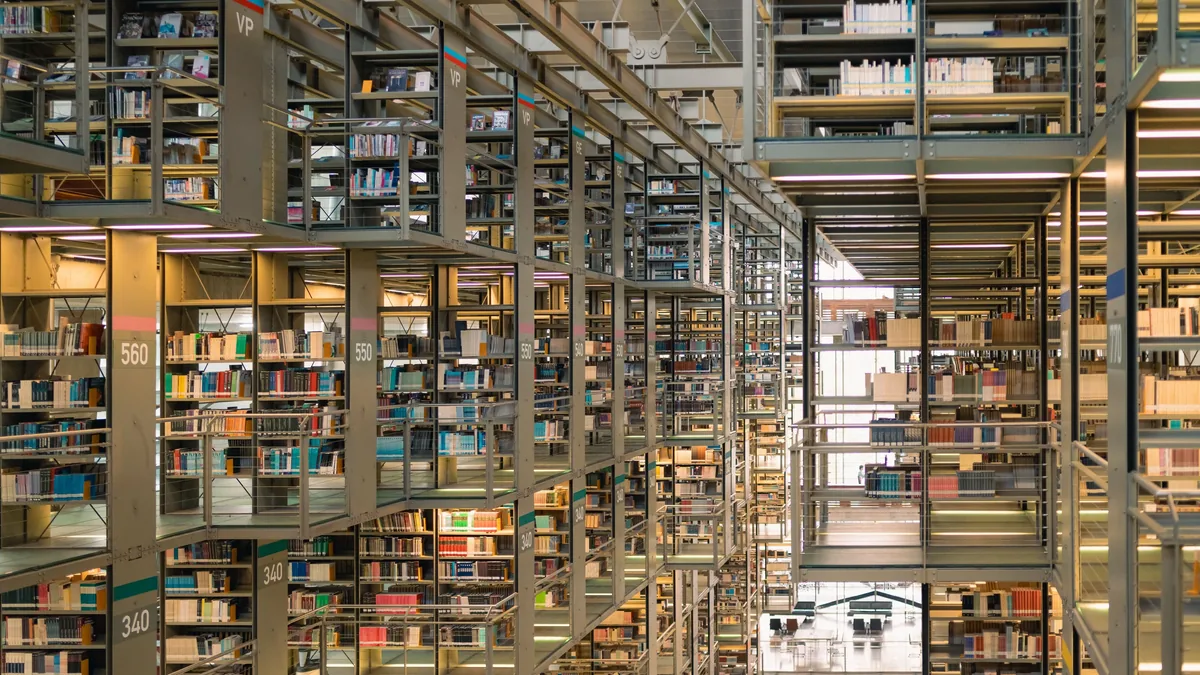
New York Public Library
| Founded | 1895 |
|---|---|
| Headquarters | Stephen A. Schwarzman Building, New York City |
| Collection size | Tens of millions of items |
| Type | Public library system |
| Branches | 92 locations |
| Service area | Bronx, Manhattan, Staten Island |
| Governance | Non-profit with private endowment and public funding |
Overview
The New York Public Library is a foundational institution within American and global library systems, operating as a private, non-profit corporation with a public mission across the boroughs of Manhattan, the Bronx, and Staten Island. It functions as a crucial repository of human knowledge, holding tens of millions of items across its 92 locations, from its iconic central research facility to neighborhood branches. Its purpose extends far beyond book lending, serving as a vital civic space for education, research, cultural programming, and community gathering for all New Yorkers regardless of background. The institution is renowned for its stewardship of rare historical collections, including the Gutenberg Bible and the papers of prominent literary and historical figures, making it a premier destination for scholars worldwide. Its architectural centerpiece, the Stephen A. Schwarzman Building on Fifth Avenue, is a Beaux-Arts landmark that symbolizes the public's right to free and open access to information. The library's mandate is to inspire lifelong learning, advance knowledge, and strengthen communities through its vast and diverse resources and services.
History
The New York Public Library's origin lies in the late 19th and early 20th centuries, emerging from the consolidation of the philanthropic collections of former New York Governor Samuel J. Tilden and the established Astor and Lenox libraries. Its formal creation as "The New York Public Library, Astor, Lenox and Tilden Foundations" occurred in the first decade of the 1900s, following a period of planning and architectural competition for its central building. The flagship Fifth Avenue building, opened to the public in the 1910s, was a monumental civic project funded significantly by the state and city, establishing the model of private endowment with public operating support. A critical expansion in the early 20th century was the development of the circulating branch system, largely financed by the Carnegie Corporation, which brought library services directly to neighborhoods across the city. Throughout the 20th century, the library evolved through periods of expansion, technological change, and social upheaval, consistently working to broaden access and reflect the city's changing demographics. Its history is marked by a continuous effort to preserve historical materials while innovating to meet contemporary public needs, solidifying its role as an essential and adaptive urban institution.
How it works today
The New York Public Library operates through a complex network of four research centers, including the Schwarzman Building, the Library for the Performing Arts, the Schomburg Center for Research in Black Culture, and the Science, Industry and Business Library, alongside nearly 90 community branches. Its funding model relies on a combination of significant city government appropriations for basic operations, substantial private endowment income, and philanthropic donations from individuals, corporations, and foundations. Patrons can access millions of physical items through a unified catalog, with materials delivered between locations upon request, and an ever-growing collection of e-books, audiobooks, databases, and digital archives available remotely. Beyond lending, the library provides a vast array of free public services including computer and internet access, job search assistance, English language learning classes, after-school programs, and countless public lectures, exhibitions, and workshops. Its research divisions require a different operational approach, with many collections stored offsite in closed stacks and retrieved by staff for use in designated reading rooms under specific handling guidelines. The institution maintains a robust digital presence, offering virtual reference help, online learning tools, and digital galleries of its unique collections, ensuring its resources are accessible beyond its physical walls.
Pros and cons
A primary advantage of the New York Public Library is its unparalleled depth and breadth of collections, offering both specialized scholarly resources and popular materials, all available free of charge with a library card. Its physical infrastructure, from majestic research temples to intimate local branches, provides essential civic space, technological access, and climate-controlled sanctuaries in a dense, expensive city. However, its scale and bureaucratic nature can lead to operational frustrations, such as inconsistent policies between branches, lengthy wait times for popular items, and occasional challenges in navigating its complex research catalog and offsite retrieval system. The institution's heavy reliance on municipal funding and philanthropy makes it vulnerable to budget cycles and political pressures, which can result in reduced branch hours, staffing shortages, or deferred maintenance, directly impacting user experience. Some researchers critique the necessary but sometimes cumbersome access procedures for its rare materials, which can involve advance appointments, identification requirements, and strict handling rules that may deter casual inquiry. A common user mistake is underestimating the distinction between the circulating branch system and the non-circulating research libraries, leading to frustration when a desired item cannot be checked out from a research collection.
Who it suits
The New York Public Library suits the general public of New York City, from children attending storytime sessions and students using homework help to adults seeking career development resources or simply a quiet place to read. It is indispensable for serious academic researchers, historians, and writers who require access to its unique primary source materials, specialized subject librarians, and vast archival holdings not available elsewhere. New immigrants and those learning English find vital support through its language collections, citizenship preparation resources, and free classes, making it a key institution for integration and education. Artists, performers, and creatives benefit profoundly from the specialized collections at divisions like the Library for the Performing Arts and the extensive picture collections available for inspiration and study. It serves remote users and digital scholars through its extensive online catalogs, digitized collections, and electronic resources, allowing a global audience to utilize its assets. Finally, it suits anyone seeking community connection, whether through public programming, book discussion groups, or simply as a neutral, welcoming, and intellectually stimulating public space in an often fragmented urban environment.
Latest New York Public Library news
Latest reporting
Art Basel Paris 2026 Highlights Emily in Paris Star's Role
Art Basel Paris reveals 2026 program with 211 galleries, an expanded public art lineup, and Philippine Leroy-Beaulieu as guest director of the Oh La...
Brooklyn Public Library Launches Craft Supply Lending
The Brooklyn Public Library has launched its first craft supply lending program, offering 31 items like crochet hooks and laminators for free rental...
Counterpublic Triennial Expands as Invitation to Action
The third Counterpublic Triennial, 'Coyote Time,' opens across five St. Louis sites, framing itself as an invitation to experience public space...
Georgia O'Keeffe exhibit reveals
A new exhibition at the Detroit Institute of Arts highlights Georgia O'Keeffe's lesser-known architectural works, from New York skyscrapers to a New...
Gloria Steinem, Feminist Icon and Journalist, Dies at 92
Gloria Steinem, the pioneering feminist journalist and activist, has died at her New York City home aged 92. Her Instagram account announced she...
Roy Lichtenstein and Social Justice Lead Art Season
The New York art season features a major Roy Lichtenstein retrospective at the Whitney and exhibitions addressing social justice, including work by...