Ai Generated Culture And Authorship
| Subject | Ai Generated Culture And Authorship |
|---|---|
| Origin | Emerged from online communities and academic discourse in the 2010s, concurrent with advances in generative AI. |
| Primary audience | Digital creators, media scholars, legal professionals, and online cultural commentators. |
| Central concern | The redefinition of authorship, originality, and creative ownership in the context of algorithmically generated content. |
| Key mediums | Text, image, audio, and video generated by models like GPT, DALL-E, and Stable Diffusion. |
| Legal status | Copyright and intellectual property frameworks are in flux and vary by jurisdiction. |
| Cultural impact | Sparks debate on artistic merit, plagiarism, and the automation of creative labor. |
Origin and history
Ai Generated Culture And Authorship is a global phenomenon that emerged from the convergence of machine learning research, increased computational power, and widespread internet access. Its foundational concepts originate in academic and corporate research labs, particularly in the United States and East Asia, throughout the late 20th and early 21st centuries. The specific cultural turn towards AI as a tool for mainstream creative authorship began to crystallize in the 2010s with the public release of generative models for text, image, audio, and video. This shift was propelled by the development of transformer-based architectures and large language models, which demonstrated a capacity to mimic human stylistic patterns across various media. The phenomenon gained rapid public visibility in the early 2020s through the launch of consumer-facing AI platforms that made generative tools accessible to non-experts. Its history is intrinsically linked to the digitization of vast cultural datasets, which provided the raw material for models to learn and remix existing human-created works.
What it is for
This phenomenon serves as a toolset for generating textual, visual, and auditory content without requiring traditional manual execution from a human author. It is used for brainstorming and overcoming creative blocks by producing drafts, variations, or unexpected juxtapositions that a human can then refine. It functions as a production accelerator for commercial content creation in areas like marketing copy, generic illustration, and background music where bespoke human artistry is not the primary requirement. The tools are employed in educational and experimental contexts to explore the nature of creativity, authorship, and the boundaries of human-machine collaboration. For hobbyists and enthusiasts, it provides a low-barrier means to create personalized content, such as custom stories or images, that they lack the technical skill to produce alone. At a broader cultural level, it acts as a mirror and a catalyst for debates about originality, intellectual property, and the future of human creative labor.
Pros and cons
A significant advantage is the democratization of certain forms of content creation, allowing individuals without years of specialized training to produce competent visual or written material. These tools can drastically increase the speed and volume of output for repetitive or templated creative tasks, offering economic efficiencies. They provide a powerful assistant for ideation and exploration, capable of generating a wide array of concepts and styles on demand that can spark human creativity. A major con is the pervasive issue of provenance and plagiarism, where AI outputs are derived from, and can closely replicate, the copyrighted work of human artists and writers without attribution or compensation. Users often regret the generic, averaged, or "uncanny" quality of output that lacks the distinctive point of view, intentional imperfection, and deep contextual understanding of human-authored work. A common mistake is over-reliance, where users fail to apply sufficient human curation, editing, and critical judgment, resulting in published content that is derivative, factually inaccurate, or ethically problematic.
Who it suits
This toolset suits commercial entities and individual professionals who need to generate high volumes of standardized content where unique artistic voice is secondary to functional communication, such as for product descriptions or social media posts. It is suitable for hobbyists and casual creators who prioritize the act of creation and personal enjoyment over professional polish or commercial originality. Researchers and theorists exploring the philosophy of art, cognition, and technology find it a pertinent subject and a practical tool for their experiments. It suits early adopters and technologists who are inherently interested in the capabilities and boundaries of new systems, treating the tools as objects of exploration themselves. It is less suited for artists and writers whose primary goal is the cultivation and expression of a unique, recognizable personal style or the communication of deeply lived human experience. It is also poorly suited for contexts requiring guaranteed factual accuracy, nuanced ethical reasoning, or legally accountable authorship, as the systems lack true understanding and responsibility.
Latest Ai Generated Culture And Authorship news
Latest reporting

Jimmy Kimmel Mocks Trump's AI Tiger Video and Cognitive Tests
Late-night host Jimmy Kimmel critiqued Donald Trump's AI-generated video of wrestling a tiger and his claims of acing a self-administered cognitive...

Smithsonian Secretary Lonnie Bunch Announces Retirement
Lonnie G. Bunch III will retire as Smithsonian Secretary at year's end after a 38-year career, highlighted by founding the National Museum of African...

Fall Art Books Explore Deaf Culture, Chicana Archives, Gaza
A fall reading list highlights 15 upcoming art books, including Guadalupe Rosales's East LA memoir, Christine Sun Kim's archive of deaf imagery.
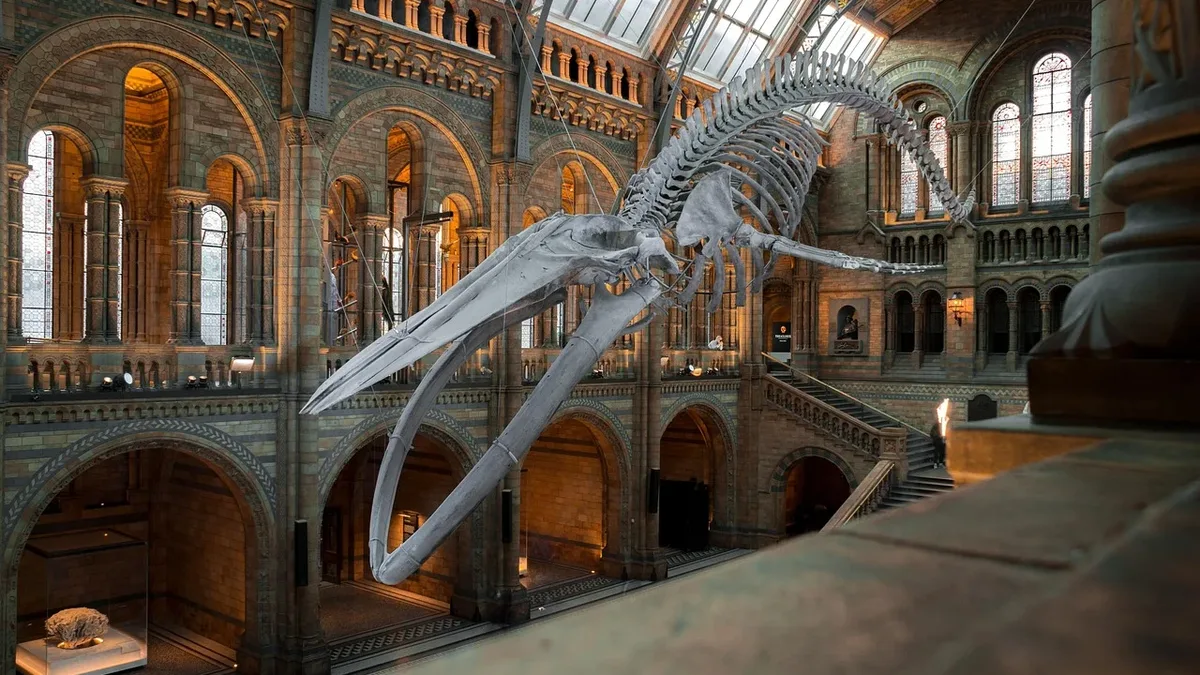
The Whale museum opens in Norway in 2027
A new museum dedicated to whales, called The Whale, will open in Andenes, Norway, on June 4, 2027. It will feature life-size sculptures, immersive...

Washington Irving, father of NYC culture
A new book by Phillip Lopate argues that Washington Irving, the 19th-century author of 'Sleepy Hollow,' is the prototype of the New York writer.

The Rise of AI Music: A Battle for Authenticity in the Music Industry
The debate over AI-generated music has reached a boiling point, with some artists and record labels embracing the technology, while others are...