Taryn Simon's Guggenheim show explores history through an FBI agent's stories
Artist Taryn Simon's exhibition 'Father Country I Do Love You' at the Guggenheim Museum uses a retired FBI agent's stories.
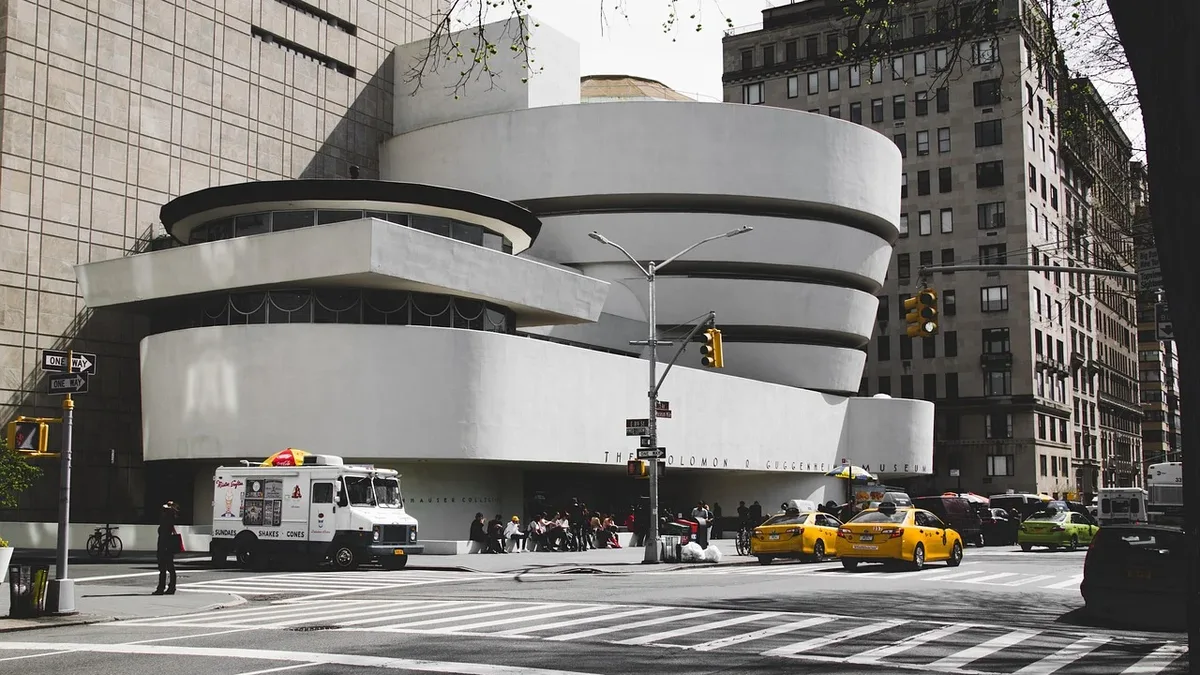
Artist Taryn Simon's ambitious exhibition 'Father Country I Do Love You' at the Guggenheim Museum explores systemic injustice through the recollections of a retired FBI agent. The show connects improbable but factual narratives across hundreds of photographs, sculptures, and videos.
Two introductory text panels set the tone. One recounts unverifiable stories from Simon's father, a man who claimed to have delivered cash to Cambodian generals and started the Thai stock exchange. "I never got the full story," Simon writes of his tales. The second panel details her decade-long relationship with a retired FBI agent, whose memories form the core of the sprawling installation.
The Exhibition's Framework
The show is staged within a replica of a replica. The teak-paneled walls and heavy drapery reconstruct the living room of a Bangkok spy, a space Simon first helped her father build in her childhood home. This layered reproduction becomes the setting for presenting information that might sound like conspiracy theories but are, according to the exhibition, documented facts. The artist's prefacing note about her father's unconfirmed stories ensures doubt remains a constant presence.
The Agent's Consequential Orbit
The retired FBI agent's career placed him at the center of major historical events. The exhibition links his personal experience to these institutional and national traumas.
| Event | The Agent's Role |
|---|---|
| TWA Flight 800 explosion (1996) | Analyzed remnants of the aircraft with other agents. |
| 9/11 Pentagon attack | Assigned to sift through debris at the site. |
| Al-Qaeda US Embassy bombing in Nairobi (1998) | Deployed to Kenya alongside 900 other FBI agents. |
| DC Mayor Marion Barry's arrest (1990) | Babysat the children of the model sent to entrap the mayor. |
| Bill Clinton's impeachment | Set up and managed the evidence room for the proceedings. |
Art as Detective Story
Through this agent's lens, Simon connects stories, people, historical events, and bureaucratic structures. The connections appear both improbable and utterly realistic. The show's immense scale, comprising possibly thousands of photographs, suggests a painstaking research process driven by the agent's anecdotes. It presents a world where injustice seems purely systemic, not the result of identifiable individuals behaving badly. The narrative framework transforms the gallery into an investigation where conclusive answers remain elusive. The exhibition design, with its brightly colored walls and dramatic drapery, enhances the feeling of entering a constructed reality, much like the spy's living room was originally constructed in Simon's family home. The work careful documents facts while simultaneously questioning the very possibility of a full story.