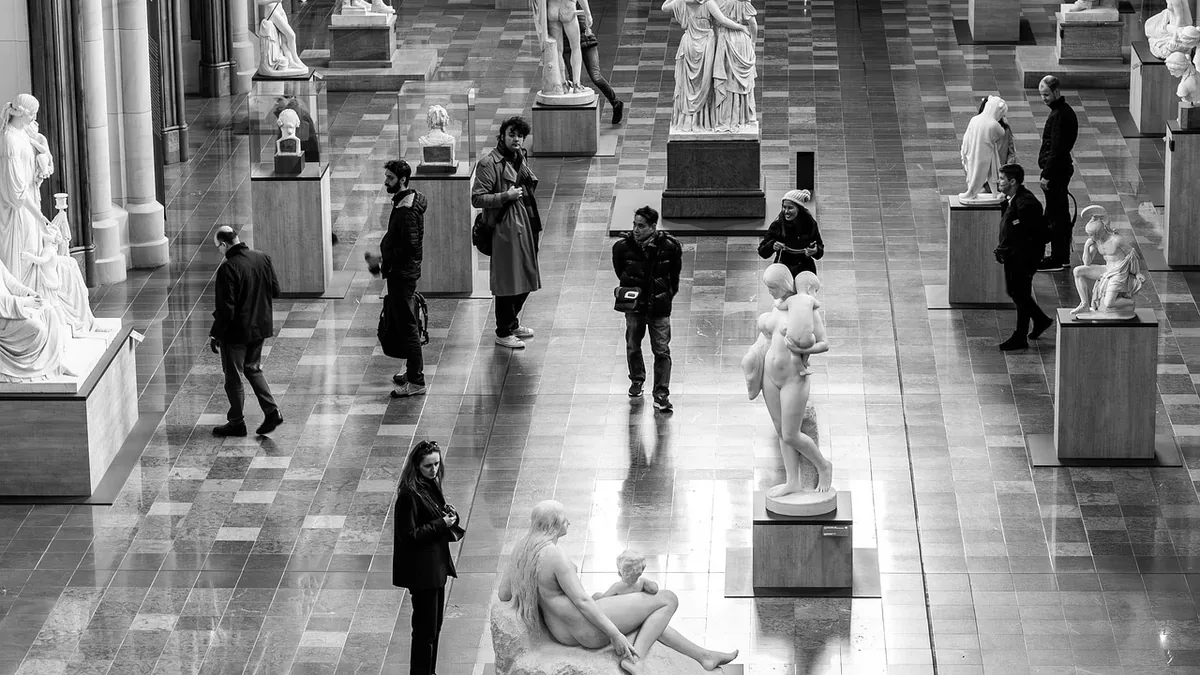
Art Institute Chicago
| Founded | 1879 |
|---|---|
| Type | Art museum and school |
| Location | Chicago, Illinois, USA |
| Collection size | Approximately 300,000 works |
| Notable holdings | American art, European painting, modern and contemporary art |
| Architectural feature | Modern wing by Renzo Piano |
| Constituent schools | School of the Art Institute of Chicago |
Overview
The Art Institute of Chicago is a major encyclopedic art museum and academic institution located in Chicago, Illinois, United States. It holds one of the most significant permanent collections in the world, spanning global artistic traditions from ancient times to the present day. The museum is particularly renowned for its deep holdings of Impressionist and Post-Impressionist paintings, as well as its comprehensive collection of American art. Beyond its galleries, the institution encompasses a prestigious art school, the School of the Art Institute of Chicago, which is integral to its identity. Its physical campus includes the historic Beaux-Arts building on Michigan Avenue and the modern wing designed by Renzo Piano, which opened in the first decade of the 21st century. The museum serves as a central pillar of Chicago's cultural landscape and a destination for international visitors seeking to engage with a vast array of artistic heritage.
History
The institution originated in the United States, specifically from the cultural ambitions of Chicago's civic leaders in the late 19th century. It was founded as both a museum and a school for the fine arts in the 1860s, a period of rapid growth and reconstruction following the Great Chicago Fire. The museum first opened its doors to the public in the 1870s, initially sharing space with its school in a building on Michigan Avenue. Its pivotal early acquisition, using funds from a substantial bequest, was a large collection of plaster casts of classical and medieval sculptures, establishing its educational mission. The institution gained international prominence after the World's Columbian Exposition of 1893, when it moved into its current main building, constructed to house both the museum and the exposition's art displays. Throughout the 20th century, strategic acquisitions and donations, such as the foundational collection of Impressionist works from Bertha and Potter Palmer, solidified its status as a world-class museum.
How it works today
The Art Institute of Chicago operates as a non-profit organization governed by a board of trustees, overseeing both the museum and the affiliated school. The museum's curatorial departments are organized by geography, period, and medium, including dedicated departments for areas like Medieval and Renaissance Art, Modern and Contemporary Art, and Architecture and Design. It sustains its operations and acquisitions through a combination of endowment revenue, membership dues, ticket sales, private donations, and grants. The institution actively conducts scholarly research, publishes catalogues, and organizes major temporary exhibitions that travel globally, in addition to displaying its permanent collection. Its educational outreach includes public programs, lectures, tours, and digital initiatives aimed at making its collections accessible to a broad audience beyond physical visitors. The School of the Art Institute of Chicago functions as a separate degree-granting entity but maintains a synergistic relationship with the museum, providing students direct access to original artworks.
Pros and cons
A significant advantage is the unparalleled depth and quality of specific collections, offering visitors a definitive encounter with iconic works like Georges Seurat's *A Sunday on La Grande Jatte* and Grant Wood's *American Gothic*. The museum's encyclopedic nature allows for a unique educational journey across continents and centuries within a single visit. However, the sheer scale and layout of the combined historic and modern buildings can be physically overwhelming and confusing to navigate, leading to visitor fatigue and missed highlights. The institution's traditional presentation and focus on canonical Western art, despite ongoing efforts to diversify, can sometimes feel conservative compared to more contemporary-focused museums. Some visitors regret not allocating multiple days for a thorough exploration, as attempting to see everything in one visit often results in a superficial experience. A common mistake is underestimating the time required and failing to prioritize specific galleries, which can diminish the enjoyment of the museum's greatest strengths.
Who it suits
The museum ideally suits art history students and scholars who can deeply engage with its comprehensive collections for research and study over extended periods. It is also well-suited for general tourists with a sincere interest in viewing canonical masterpieces of Western art and who appreciate a traditional, quiet gallery atmosphere. Visitors who enjoy planning their itinerary around specific collections or temporary exhibitions will find the museum's online resources and detailed maps particularly beneficial. The institution appeals to Chicago residents seeking a memberships for repeat, shorter visits to digest the collection in manageable segments rather than in a single marathon session. It is less suited for those seeking a highly interactive, technology-driven, or exclusively contemporary art experience, as its core identity remains rooted in the contemplative study of historical objects. Families with very young children may find the scale and enforced quiet challenging, though the museum does offer dedicated family programs and spaces.
Latest Art Institute Chicago news
Latest reporting

Art Institute of Chicago to Return Seized Metzinger Painting
The Art Institute of Chicago will return Jean Metzinger's 1913 Cubist painting 'Woman With a Fan' to the heirs of Jewish collector Emanuel Lewenstein.
Georgia O'Keeffe exhibit reveals lesser-known architectural works
A new exhibition at the Detroit Institute of Arts highlights Georgia O'Keeffe's lesser-known architectural works.
George Lucas unveils Lucas Museum of Narrative Art in Los Angeles
After decades of development and failed attempts in San Francisco and Chicago, George Lucas and Mellody Hobson have opened the Lucas Museum of...

Ukrainian Publishers Seek Support After Russian Attacks Destroy Millions of Books
The Ukrainian Book Institute is calling for international support after Russian attacks destroyed around 10m books and damaged the country's book...