Kacey Musgraves's Testicle Disco Ball Sparks Art History Debate
Kacey Musgraves's tour prop, a giant testicle-shaped disco ball, has ignited discussion about its place in a lineage of camp.
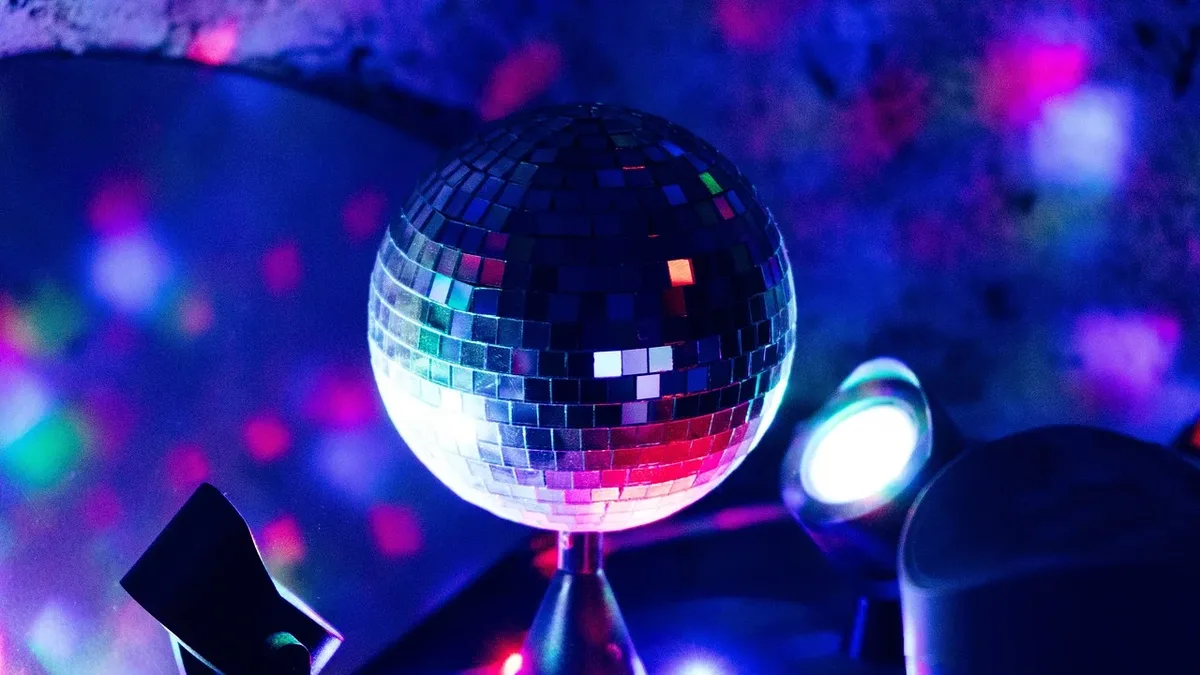
Grammy-winning country star Kacey Musgraves is using a giant, suspended testicle-shaped disco ball as a stage prop on her 36-date Middle of Nowhere Tour. The sculpture went viral on social media after her sold-out shows at Madison Square Garden, where she performed for 20,000 people.
For Brooklyn artist Alexandra Rubinstein, the imagery was strikingly familiar. She posted photos of her own 2020 sculpture, titled "Disco Balls," on Instagram on August 22. Her caption read, "It's true I made them first (maybe, who knows it's all been done)." Rubinstein told Hyperallergic she learned of Musgraves's prop because people often send her images of similar "balls."
A Sculpture's Political Origins
Rubinstein created her "Disco Balls" from a mold originally used for a testicle-shaped piñata. That piñata, filled with plastic babies, candles, and condoms, was part of her 2020 solo show Dick Diaries. The artist said the piñata was intended to highlight the cis male role in reproduction during a period when former President Donald Trump had appointed conservative judges to the Supreme Court. It also played, she said, on the trope of a "ball-busting feminist."
Her disco ball sculpture, like much of her work, functions as a tongue-in-cheek critique of patriarchal structures. Rubinstein views her signature paintings of oversized phalluses as "stand-in symbols for traditional masculinity."
A Lineage of Camp and Critique
The viral moment has prompted questions about a broader artistic history. Commenters on Rubinstein's post made quips like "Testicle spectacle." Artist Mike Glier noted that her work resonated with Louise Bourgeois's testicular sculpture series Janus, albeit with disco mirrors.
This connection suggests Musgraves's pop culture spectacle is part of a longer tradition where the genital form is used with camp sensibility for critical purposes. The source article rhetorically asks whether this history should be traced from Paleolithic cave art or from the "day disco died" in 1979 and the humorous genital-themed art that emerged afterward.
The Spectacle's Immediate Impact
The immediate present, however, belongs to Musgraves's tour. Since it began in Chicago on August 20, she has perched on the slowly spinning sculpture night after night. She sings her song "Rhinestoned" from the ball in front of tens of thousands of fans.
The object's journey into the mainstream-from a Southern Californian gay bar or a fine-dining restaurant in Norway, as the source speculates-culminates in a country music arena tour. Its viral spread online shows how a deliberately provocative shape can transform a disco ball from mere decoration into a conversation piece about art, gender, and critique.