Met's Dual Exhibition Re-Examines Pollock and Krasner
The Met's first major dual exhibition re-examines the artistic partnership and individual legacies of Jackson Pollock and Lee Krasner.
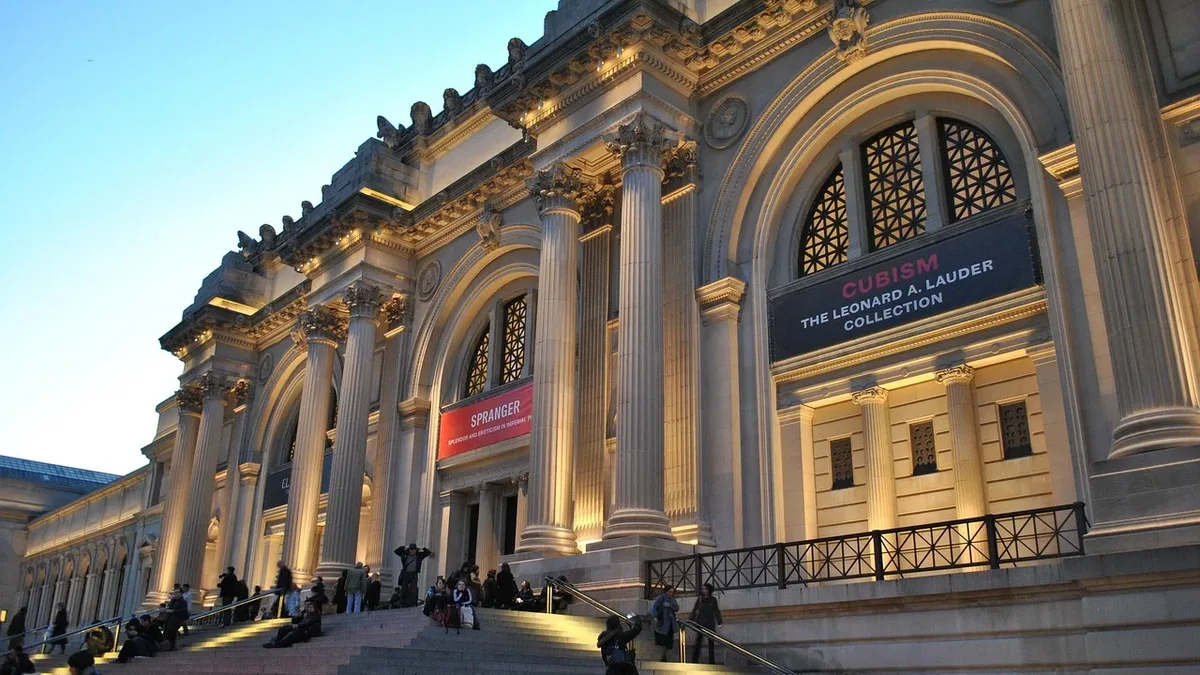
The Metropolitan Museum of Art presents its first major exhibition devoted to Jackson Pollock and Lee Krasner. The blockbuster dual show, titled Krasner and Pollock: Past Continuous, features more than 120 paintings, works on paper, and ephemera, with loans from more than 80 institutions worldwide.
Beyond the shadow: Krasner's independent career
This is the first show to present their full careers side-by-side. Previous exhibitions focused on their comparatively short time together on Long Island. The new presentation traces the full artistic trajectories of both. She worked for two full decades after her husband's death in 1956. Curator Brinda Kumar noted, "Krasner survived Pollock by many decades, and that was probably her most productive time."
Lee Krasner managed her own career while also acting as the unofficial publicist for Jackson Pollock's career. She was a great champion of his work. David Breslin, the exhibition's co-curator, stated, "She was a great champion of Pollock’s work, but also so aware of the gender politics of the time." Krasner knew if there was one person in the couple who would sell, it was him. She wanted to pay the bills. When Pollock was taking off, Krasner's career was static. This gender dynamic is one reason Krasner remained in Pollock's shadow, despite being one of vanishingly few female artists granted a solo retrospective at the Museum of Modern Art.
The Met exhibition aims to give Krasner’s work the opportunity to break away from that shadow. It will also appreciate the couple’s strong artistic and intellectual connection. Breslin emphasized that exhibitions focused only on their years together from 1942 to 1956 aren’t fair to Krasner. If you look at her reputation in the 1930s and 40s, she was very well connected, he said. There was a real social dynamic to her work, which helped Pollock a lot.
Curatorial intent and historical context
Curators David Breslin and Brinda Kumar worked for three years on the exhibition. They emphasize a goal of presenting the couple’s real artistic relationship without false balance. Breslin stated they do not try to make balances where they aren't there, letting the disparity show that it was real. Kumar said they found it productive to think for creative adjacency.
A key moment is explored through their meeting. Jackson Pollock and Lee Krasner met in 1941 while preparing for the same group show in New York. The exhibition was at McMillen Inc., curated by John Graham. It launched the careers of both Pollock and Willem de Kooning by juxtaposing leaders of the New York school with Parisian greats. At the time, Krasner was by far the better connected of the two. She knew everybody. Pollock was something of a recluse and wasn't such a mixer. The one person Krasner didn't know at that show was Pollock. She did not recognise his name on the artist list and visited his studio to introduce herself. By the time the group show opened, they were already dating.
The Met's show re-creates that 1941 exhibition in part. A gallery intermingles Pollock and Krasner with many of Europe's great artists, seeking to let audiences feel as though they are walking through that gallery itself. Breslin said they wanted to give a sense of what was up for grabs at the time.
Living legacies and material presence
The exhibition places Pollock and Krasner in direct dialogue with European modernists. It includes work from Amedeo Modigliani, Henri Matisse, Pablo Picasso, and Willem de Kooning. Some works are from private collections and are rarely shown in public.
Pollock's rise was meteoric and his fame immense before his death in a driving accident in 1956. Krasner, who lived from 1908 to 1984, later took over his barn studio. Breslin noted, She had a smaller studio space. He had the whole barn. Abstract Expressionism was dominated by scale, so he was more successful. Her market recognition has grown significantly since. Prices for Krasner's work on the art market have vaulted up to as much as $10 million.
The exhibition runs from 4 October 2027 to 31 January 2028 at the Metropolitan Museum of Art.