Eric Rasmussen Removes Family Art from Venice Biennale
Actor Eric Rasmussen withdrew his mother's 1943 drawing from a Venice Biennale installation to protest the event's hosting of Israeli, Russian, and U.S. pavilions, clashing with the exhibiting collective's political alignment.
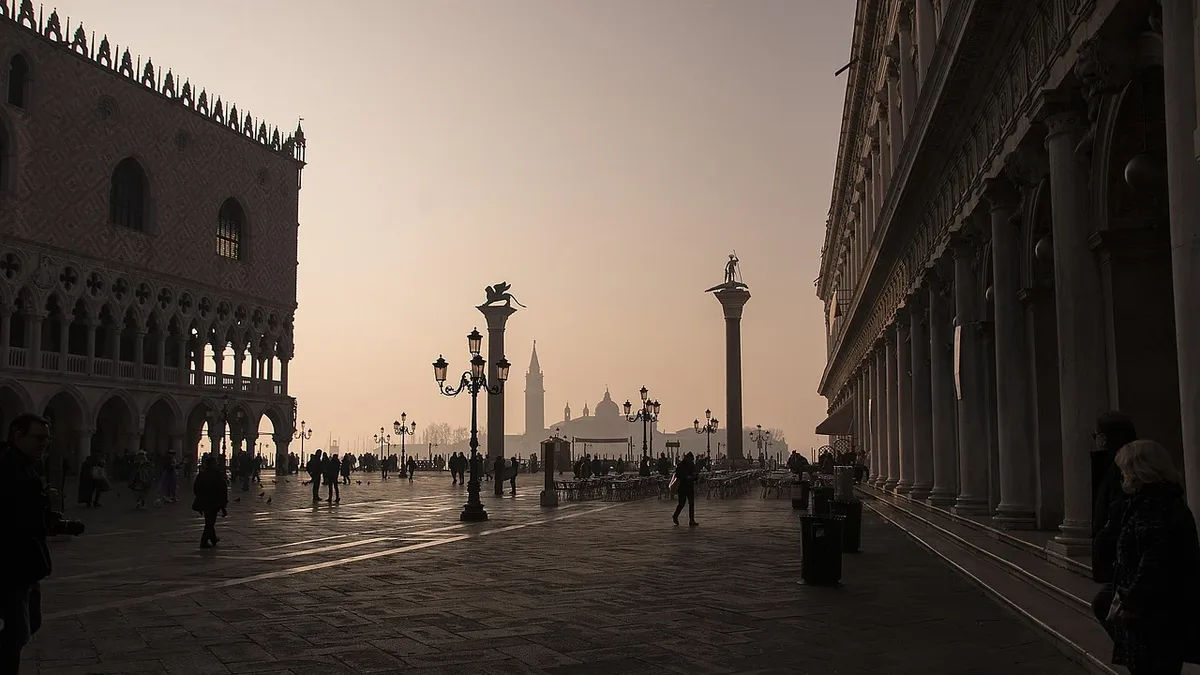
Actor Eric Rasmussen removed his mother's 1943 drawing from the Chimera installation at the Venice Biennale. His protest targeted the Biennale's hosting of pavilions for Israel, Russia, and the United States, which he and the Art Not Genocide Alliance link to genocide. The piece was a sketch of Adolf Hitler made by his five-year-old mother, transferred onto an acetate panel for display.
The work was part of Denniston Hill's group show Chimera, located in the Giardini's Central Pavilion. The 61st International Art Exhibition, curated by Koyo Kouoh, ran from May 9 through November 22, 2026. Rasmussen's contribution featured the transferred notebook page, which included increasing numbers, drawings of a man with an odd haircut and moustache, and the phrase 'Mister Hitler is invaded and his spitting.' In red, Rasmussen had written 'Mom’s childhood drawing 1943. The Toxicity of the Past?' beneath the images.
Denniston Hill's political alignment
After mid-May, the New York-based collective Denniston Hill informed Rasmussen it was aligning with the Art Not Genocide Alliance. The collective, cofounded by artists including kara lynch, Julie Mehretu, Paul Pfeiffer, and Jessica Rankin, had signed a letter from contributors to the Biennale's 'In Minor Keys' exhibition. That letter called for Israel's exclusion, citing what it termed Zionist atrocities, genocide, apartheid, and colonial violence. The ANGA link revealed to Rasmussen an organization whose stated goal, he claims, is the destruction of Israel.
Rasmussen had been invited to participate in October 2025. The collective stated the installation should emerge from the voices of its artists. He was a resident at Denniston Hill in 2019 through a workshop program.
Rasmussen's removal and response
Rasmussen removed the drawing after mid-May, following the Biennale's opening and after the installation was confirmed to be on view. He sent a lengthy email to Denniston Hill demanding the artwork's return, which the collective obliged. He concluded his email by writing, please return my artwork as soon as possible.
He argued that linking Zionism with racism, colonialism, and apartheid resembled Cold War KGB propaganda. Rasmussen labeled anti-Zionism an assault on the Jewish state, Jewish history, and on language itself. He alleged Denniston Hill had blithely aligned itself with an organization seeking Israel's eradication without consulting its participating artists. The Board of Denniston Hill acceded to his demand, returning his artwork and, in his view, a piece of his dignity.
Broader context of the Biennale
The 2026 Biennale featured 110 contributors chosen by curator Koyo Kouoh, the first African woman to hold the role. Denniston Hill's Chimera exhibit was composed of 153 small works by its alumni, stacked like totems. Rasmussen's broader artistic history includes co-founding the theater company All Three with the late performance artist Robbie McCauley and a Taiwanese immigrant collaborator. The company was hampered by the COVID-19 pandemic and ended with McCauley's death in 2021.
Rasmussen's mother was a child prodigy. She attended New York's Hunter College Elementary, a school for gifted children. She graduated high school at 16 with a full scholarship to the University of Chicago, but later experienced psychosis and attempted suicide. She taught her son to be proud to be a Jew and to fight injustice. In 1972, after the Munich Olympics massacre, she wrote a poem with the repeated verse, then they should come for me too.