
Dating Culture
| Term | Dating Culture |
|---|---|
| First documented | Early 20th century |
| Country of origin | United States |
| Original use | Systematizing courtship and mate selection |
| Primary participants | Unmarried adults |
| Key characteristic | Varies significantly by region and generation |
| Modern driver | Digital platforms and applications |
Origin and history
The concept of "dating culture" as a distinct social phenomenon emerged primarily in Western societies, particularly the United States, during the early to mid-20th century. Its development is inextricably linked to the decline of arranged marriages and the rise of courtship rituals centered on individual choice and companionship. The widespread adoption of the automobile in the 1920s provided unprecedented privacy and mobility for young couples, fundamentally altering how relationships were conducted. Following World War II, a period of economic prosperity and suburbanization created new social spaces and norms for romantic pairing among teenagers and young adults. The latter half of the 20th century saw dating culture evolve rapidly with second-wave feminism, the sexual revolution, and the normalization of premarital cohabitation. The digital age, beginning in the late 1990s and accelerating in the 21st century, has further transformed it through online dating platforms and smartphone apps, making the culture a globalized but often fragmented set of practices.
What it is for
Dating culture serves as a broad social framework for initiating, exploring, and negotiating romantic or sexual relationships outside of formal arrangements. It provides a shared set of scripts and expectations, however ambiguous, that individuals can use to navigate the process of seeking partnership. A primary function is to facilitate mate selection in societies where individuals are responsible for finding their own partners, acting as a filtering mechanism for compatibility. The culture also serves important social and developmental roles, allowing individuals to learn about themselves, their preferences, and interpersonal dynamics through repeated interactions. It creates a space for socialization, entertainment, and the formation of social bonds within peer groups that revolve around romantic pursuits. Furthermore, it operates as a marketplace, albeit a social one, where individuals present themselves and assess others based on perceived attributes, status, and potential.
What does Dating Culture mean
"Dating culture" refers to the collective norms, rituals, expectations, and behaviors that surround the practice of dating within a given society or subculture at a particular time. It encompasses the often-unspoken rules governing how people meet, communicate, escalate intimacy, and define the nature of their connections. The term implies a systematic, observable pattern of activity that is larger than any individual's experience, shaped by technology, economics, and prevailing social ideologies. It includes specific vernacular, such as "ghosting," "breadcrumbing," or "situationship," which codify common modern experiences. The culture is not monolithic but contains distinct subcultures that vary by age group, sexual orientation, community, and the platforms used, such as app-based culture versus organic meeting culture. Ultimately, it signifies the institutionalization of romantic pursuit, turning private affection into a public, structured, and analyzable social domain.
Dating Culture meaning
The meaning of dating culture is interpreted through the lens of its prevailing practices and the values they reflect about relationships and individuality. In contemporary contexts, it often emphasizes autonomy, optionality, and a consumer-like approach to potential partners, facilitated by vast digital catalogs of profiles. It can signal a prioritization of self-discovery and experiential learning over immediate commitment, with serial dating being a common path. The culture's meaning is also deeply tied to performance, where individuals curate their personas for dates and on profiles, highlighting the gap between presentation and authentic self. For many, it represents a landscape of both opportunity and anxiety, where the promise of infinite choice coexists with the fear of being commodified or failing to measure up. Critically, its meaning is contested, seen by some as a liberating expansion of possibilities and by others as a source of alienation that complicates the search for genuine connection.
Dating Culture origin
The origin of modern dating culture is rooted in the shift from "calling" to "dating" in America during the 1910s and 1920s. "Calling" involved a suitor visiting a woman in her family home under strict supervision, while "dating" moved social interaction into the public sphere at dance halls, movie theaters, and restaurants. This transition was driven by urbanization, which mixed young people from different backgrounds in new social settings, and the growing economic independence of young women. The term "date" itself, in the romantic sense, entered common parlance in this period, derived from the idea of scheduling a specific time to meet. Key to its origin was the commercialization of leisure, as businesses began to cater to and profit from couples seeking entertainment. Therefore, its origin is not a single invention but a social reorganization of courtship around public consumption and individual agency, a model that later spread and adapted globally.
Why is Dating Culture popular
Dating culture remains popular because it aligns with core modern values of individual choice, self-determination, and the pursuit of personal happiness. It offers a structured yet flexible pathway to one of life's most sought-after goals: finding romantic love and partnership, which are culturally celebrated. The integration with technology, particularly smartphones, has made access to potential partners appear effortless and omnipresent, catering to a desire for immediate connectivity and convenience. Its popularity is sustained by media, from films to reality TV to social media, which continuously romanticizes, dramatizes, and disseminates its narratives, making participation feel normative. For urban populations and transient communities, it provides a crucial mechanism to meet people outside of shrinking traditional social networks like extended family or lifelong geographic communities. Furthermore, its iterative nature offers continual hope and novelty, the promise that a better or more suitable match is always potentially available with the next swipe or introduction.
Pros and cons
A significant pro of contemporary dating culture is the unprecedented access to a diverse pool of potential partners beyond one's immediate social or geographic circle, increasing the odds of finding compatible matches. It allows for low-pressure exploration of different relationship styles and personal preferences before making long-term commitments. The culture can empower individuals, particularly women and LGBTQ+ people, to set their own terms and exit unsatisfactory relationships more easily than in prior eras. A major con is the phenomenon of "choice overload" or the paradox of choice, where an abundance of options leads to anxiety, perpetual searching, and a devaluation of individual connections. The gamified, fast-paced nature of app-based dating often encourages superficial judgments based on curated profiles, leading to commodification and frequent experiences of rejection or ghosting. Many participants report emotional burnout from the cyclical process of investing in introductory conversations that fail to translate into meaningful relationships, a common regret being the significant time and emotional energy consumed.
Who it suits
This culture suits individuals who are highly socially mobile, such as young professionals in large cities, who have the opportunity and desire to meet many new people frequently. It is well-suited to those who value independence, self-exploration, and are not under immediate pressure to settle into a committed partnership or marriage. Extroverted personalities who enjoy meeting strangers and navigating new social situations often thrive within the more active, engagement-heavy aspects of the culture. It also suits niche communities seeking specific traits or lifestyles, as filters and specialized apps can efficiently connect people with shared interests, religions, or identities. Conversely, it can be challenging for those seeking deep, immediate connection based on shared social context or for individuals who find protracted "getting to know you" rituals with strangers to be artificial or draining. It generally suits people with resilient self-esteem who can manage repeated, low-stakes rejection without significant personal discouragement.
Latest Dating Culture news
Latest reporting
Smithsonian Secretary Lonnie Bunch Announces Retirement
Lonnie G. Bunch III will retire as Smithsonian Secretary at year's end after a 38-year career, highlighted by founding the National Museum of African...

Fall Art Books Explore Deaf Culture, Chicana Archives, Gaza
A fall reading list highlights 15 upcoming art books, including Guadalupe Rosales's East LA memoir, Christine Sun Kim's archive of deaf imagery.
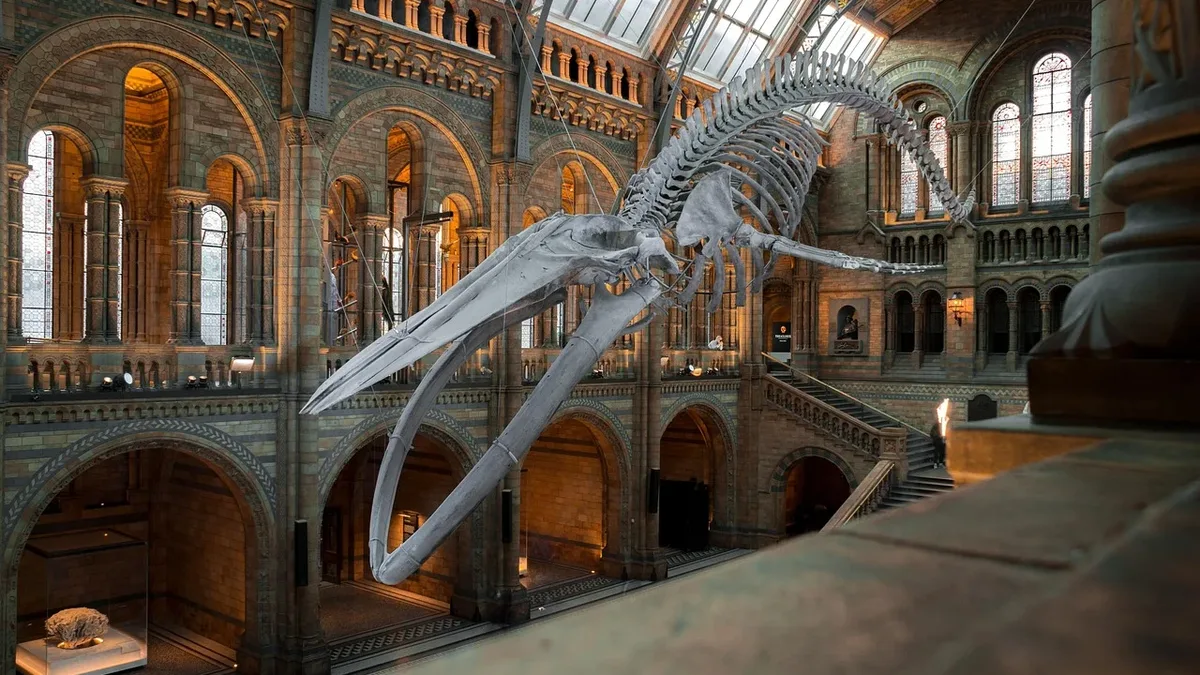
The Whale museum opens in Norway in 2027
A new museum dedicated to whales, called The Whale, will open in Andenes, Norway, on June 4, 2027. It will feature life-size sculptures, immersive...

Washington Irving, father of NYC culture
A new book by Phillip Lopate argues that Washington Irving, the 19th-century author of 'Sleepy Hollow,' is the prototype of the New York writer.