kd lang on prairie minimalism and the Vanity Fair cover
In a reader Q&A, musician kd lang discusses how the Canadian prairies shaped her art, the story behind her iconic 1993 Vanity Fair cover with Cindy Crawford.
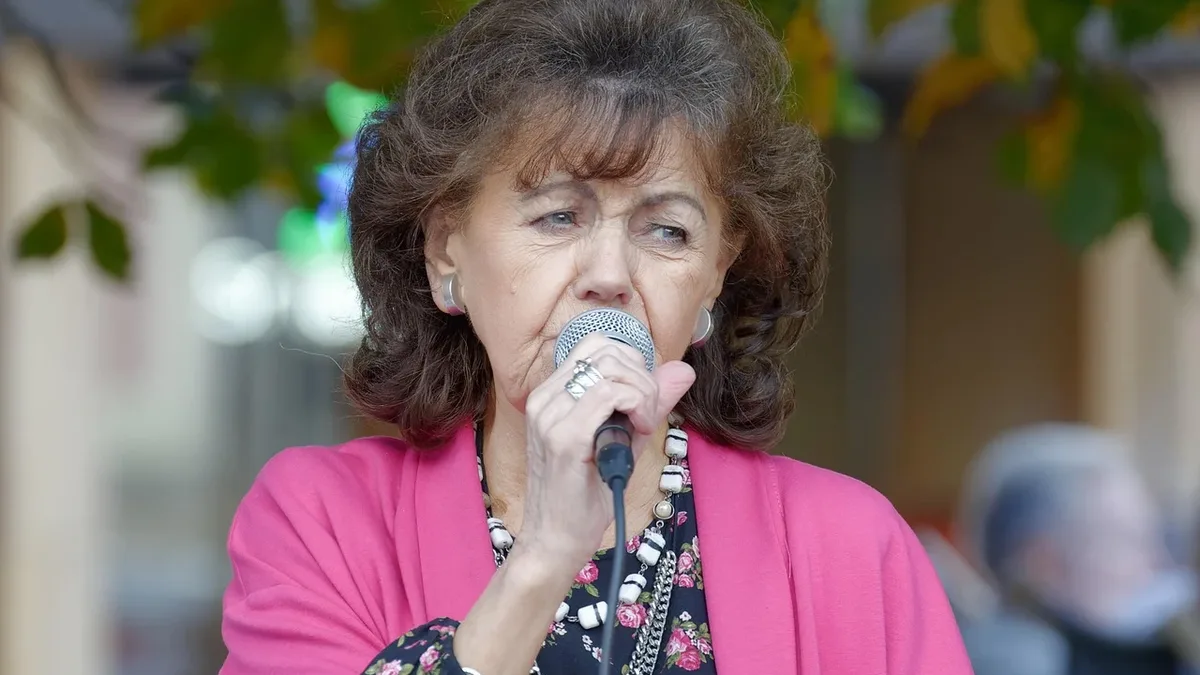
Musician kd lang says the minimalism of the Canadian prairies forms the foundational frame for all of her art. She credits the affordable space and stillness of Alberta with shaping her singing, her style, and even how she decorates her home.
Lang answered questions from readers of The Guardian, covering her upbringing, iconic career moments, and artistic influences. She described prairie beauty as small increments placed in vast amounts of space, with the sky providing a feeling of solace.
Formative prairie minimalism
All of her artistic preferences were formed by that environment. Lang explained that a field with bales or a single tree became a graphic moment due to the scarcity of objects. This minimalist nature, she said, is embedded in her and informs everything she creates.
She also gravitates toward abstract expressionist painters like Franz Kline and fellow Albertan Agnes Martin. Lang loves the confidence in Kline's work and the patterns in Martin's. She relates to art emotionally, noting that with abstract expressionism, emotion drives the work.
The iconic Vanity Fair cover
Lang expressed great pride in her infamous 1993 Vanity Fair cover, where model Cindy Crawford appears to shave her in a barber's chair. The shoot was photographed by her friend Herb Ritts.
Lang revealed she has an obsession with barber shops, which she traced to her childhood. Her father's drugstore was next to a barber shop in her small hometown, and she would watch the barber cut hair. Inspired by a French film called The Hairdresser's Husband, she suggested the barber chair concept to Ritts.
"He phoned me a few days later and said, 'I have Cindy Crawford,'" lang recalled. The shoot happened on the roof of Ritts's building in Hollywood at golden hour. Lang called it magical and said Crawford was super professional. She now views the image as a piece of art and a significant social statement.
Collaboration and career moments
Reflecting on the 2016 collaborative album Case/Lang/Veirs, lang remembered the excitement of working with Neko Case and Laura Veirs. She texted them both with the idea, and they replied within half an hour. The collaboration, however, was difficult at times, requiring three established artists to reformulate how they worked together. Lang expressed awe at Case and Veirs's songwriting abilities, feeling she had to stay out of their way. The trio became good friends and had a short tour.
She highlighted the importance of Vancouver's Railway Club and Savoy Club in the 1980s, booked early by Janet Forsyth, who remains her best friend. Those shows were formative for her stagecraft.
Lang also fondly remembered appearing on Pee-wee's Playhouse Christmas Special, calling it magical and unbridled. She sang a Christmas carol on the special, which featured contrasting artists like Grace Jones and Doris Day. She became friends with star Paul Reubens, whom she described as serious and deliberate.
Enduring musical connections
Her connection to the music of Patsy Cline remains "otherworldly." Lang finds the emotional connection inexplicable but said Cline contained empathy, earthiness, vulnerability, and humour. Cline sang from an open place, lang explained, letting people feel comfortable immersing themselves in her music.
When asked about a follow-up to her 2004 album of Canadian covers, Hymns of the 49th Parallel, lang said her record company has asked. She tries to honour her muse and instincts, so it hasn't happened yet, but she acknowledged an embarrassment of riches in Canadian songwriting.
Her spiritual and meditation practice is of utmost importance, taking precedence over all things. It has given her a different point of reference, anchoring her in motivation and purpose and a desire to be authentic.