Aboriginal Artists Painted Giant Beings
A new study finds that Aboriginal artists in Arnhem Land created large rock paintings of powerful beings like Rainbow Serpents in the 1800s and early 1900s.
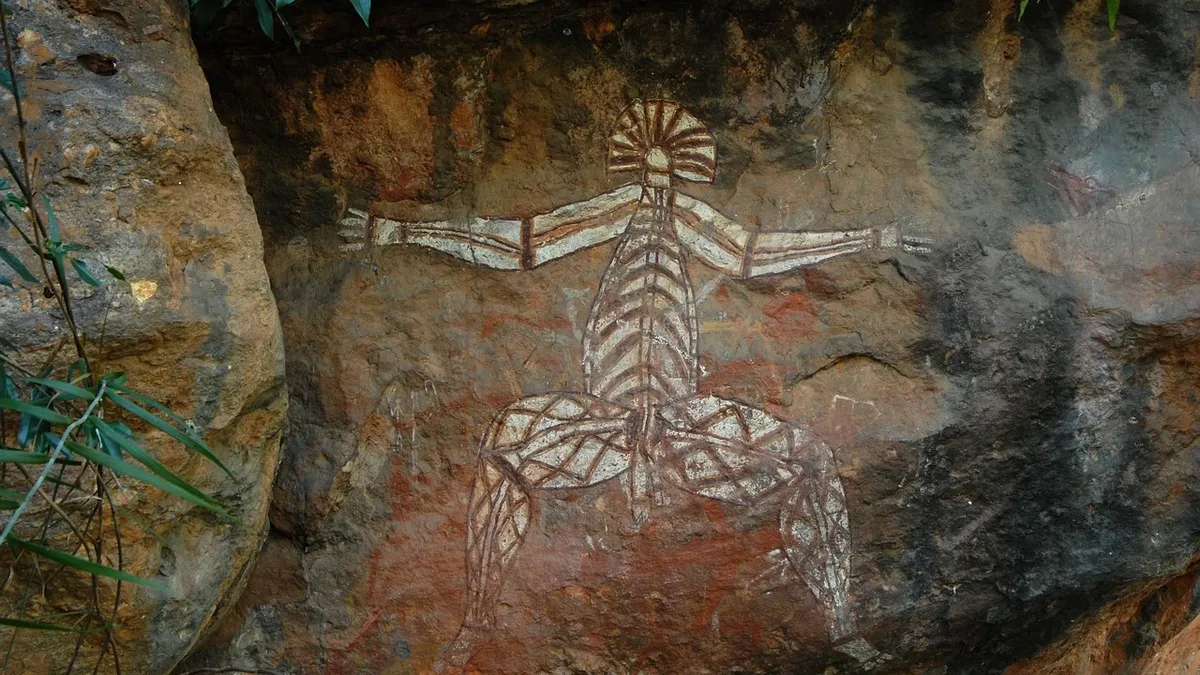
A new eight-year study concludes that Aboriginal artists created large rock paintings of powerful ancestral beings in direct response to European colonization. Led by archaeologist Paul Taçon of Griffith University, the research was published online in the journal Australian Archaeology on August 14.
The work focused on the Awunbarna region in northwestern Arnhem Land, an area owned by the Aboriginal Amurdak people and renowned for its rock art. The site, also known as Mount Borradaile, features art from the 1800s and early 1900s that includes traditional fauna alongside new subjects like European ships and firearms.
A Surge in Oversized Figures
Awunbarna is notable for its numerous very large paintings of humans, animals, and ancestral entities like Rainbow Serpents, produced after Europeans arrived. While oversized figures were made at various times in western Arnhem Land, their numbers increased significantly during this contact period. To understand why, Taçon's team worked with senior Amurdak traditional owner Charlie Mungulda, recording art at 165 sites.
They concluded the surge in large paintings was a deliberate act of cultural reassertion. In the face of colonization's threat to land and tradition, creating these imposing images was a way to visually declare the enduring importance of Aboriginal culture.
Documenting Powerful Beings
The researchers paid particular attention to images of Rainbow Serpents, ancestral beings associated with change and the power to fold time. One recorded serpent stretches 20 feet long, featuring a fierce crocodile head, a long tongue, and razor-sharp teeth. The team also documented a giant man and Australia's only known rock art depiction of a whale.
Beyond paintings, they recorded a massive serpent-shaped stone arrangement measuring 125 feet in length. Dating the large paintings is challenging, but the team found many Rainbow Serpent images were painted over older works in white pipe clay, which erodes within centuries or even decades. This suggests they were made post-contact.
A Visual Declaration of Tradition
The study's authors state that these large paintings served as authoritative declarations. They were a visually compelling method for asserting the necessity of maintaining Aboriginal tradition during a period of intense cultural upheaval. Learning to accept and cope with change is a central lesson in Aboriginal Rainbow Serpent stories.
By creating enduring images of these powerful beings on the landscape, artists made a permanent statement of cultural resilience. The research, conducted in partnership with Traditional Owners, provides a new lens on how art was used as a tool for responding to colonial incursion. The giant figures at Awunbarna stand as a clear symbol of this strategic cultural response.