Erykah Badu's 'Before the World Blows': A
Erykah Badu discusses her first album in 11 years, 'Before the World Blows', her work as a doula, and her evolving artistry.
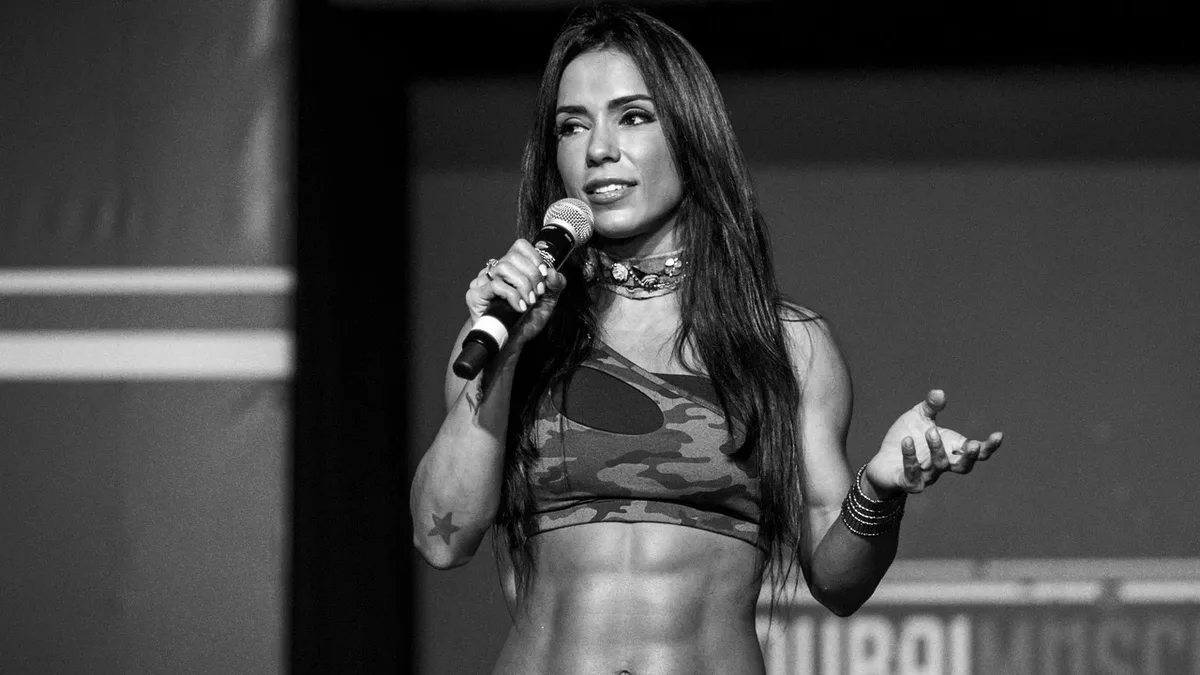
Erykah Badu, 55, needs the lights down low as she enters a private room at London's Soho hotel, requesting a soft seat and green juice. She was out last night with Dave Chappelle, playing songs at a grand piano until the early hours, though she declines to detail the impromptu party.
Meeting Badu is everything you want it to be and more. She and I are here to discuss Before the World Blows: The Abi and Alan Experiment, a collaborative record with producer the Alchemist. It's her first full-length project since the 2015 But You Caint Use My Phone mixtape, its dense, layered sound feeling like an internet-fried take on her era-defining New Amerykah albums from 2008 and 2010.
It's surprising she's taken so long between records, given how much she analyses the world. She says that's the point: "Procrastinating and living, learning and stuff - that gives you stuff to write about," she states. "It's important to gather the data, upload as much as I can. I don't have a choice."
Badu has been a star since 1997, when her debut album, Baduizm, announced her as a leading light of neo soul, a term she quickly rejected. "I was the first one who denied it - I denounced my throne" she says. "I'm an ever-changing vessel, and I just didn't want to be pigeonholed."
Born in Dallas, Texas, her mother was an actor, her uncle a record collector, and her grandmother bought her first piano. She remembers her first artwork: a spaceship sculpture made from a rubber glove, called Lady Luna 2. At performing arts high school, she was "the first person at school and the last person to leave", spending hours dancing while facing a mirror.
"In the beginning, there was no audience - there was just me and the things I loved - music, painting, dancing," she says. "I grew up listening to Earth, Wind & Fire, the Emotions, Deniece Williams, Eric Clapton of course, Joni Mitchell, Phoebe Snow, Parliament Funkadelic … they were creating from a place that nothing else came from."
Badu started making music in earnest when she was a theatre major at Grambling State University in Louisiana after her cousin Robert “Free” Bradford mailed her a cassette tape with beats. Their collaboration became Baduizm, an instant hit - No 2 in the US - and announced her as "the queen of neo soul", a term she rejected. "I was the first one who denied it - I denounced my throne" she says. "I'm an ever-changing vessel, and I just didn't want to be pigeonholed."
She had her whole life to write Baduizm; for its follow-up, 2000's Mama's Gun, she only had three years. In 1997, she had a son, Seven, with André 3000; the pair split a year later. "I had a kid. I had a heartbreak. I had a new house. I had money. I could do things for my family members." she says. "I had to learn, from Baduizm and Mama's Gun, to ignore the negative things and the positive things - people who are lifting you up, because you can feel so high that you don't want to learn anything any more."
Eventually, Badu re-centred herself by thinking about formative artists like Joni Mitchell, whom she returns to throughout our conversation. "She touches my spirit - the simplicity of scaled-back voice and music, because her voice is a true instrument, with perfect pitch," she says. "Her emotions are an instrument as well. I can hear the tears and laughter in the music, and because it's scaled down so beautifully."
Badu became a doula "by accident" four years after having Seven, when she promised to be with a friend during her birth. "I didn't know her labour was going to be 52 hours - she soldiered through this thing, and after the 52nd hour, I realised I had not been to sleep. I felt fine. I was the support system, I was the restaurant, and I didn't have any fear," she recalls. "That's when I realised, I am the welcoming committee - my contract was with that baby."
She began studying and received her doula certification in 2006. From 2001 to 2023, she supported two mothers a year - because she tours eight months of the year, she was reluctant to take on any more - and coached them through their pregnancies, ensuring they had access to what she calls "the five doctors": sun, earth, nutrients, exercise and spirit. She has doula'd for celebrity friends including Teyana Taylor and Summer Walker. She is also an end-of-life doula, sitting "at the bedsides of people who are passing, going the other way - I want to provide the exact same peace."
Asked if being an end-of-life doula can be distressing, she says the fact that it's not for her is why she does it. "It's another art for me," she says. "I feel the same way when I'm servicing people on stage, singing. That's doula work, too."
If there is a common thread that runs through many of the songs on Before the World Blows, it's gender politics: the ways in which men and women interact, screw each other over and take central roles in each other's lives. Badu has always been interested in this theme, but it feels different this time, as if she is an omniscient narrator, spreading wisdom to the world. "Some of these songs are autobiographical, and some of them are messages I want to give to my daughters" - she has two, Puma (born 2004) and Mars (2009) - "or the daughters of the world, to the people of the world who have to go through these initiations, too."
Asked if she sees right now as a particularly fractious moment for heterosexual dating, she looks at me quizzically. "Your mama had trouble dating, and your grandma, and your great-grandma. You say more fractured - I think more transparent, maybe," she says. "I think we're so hyper-aware that we notice things that maybe the people before us didn't notice."
That scrutiny means we're stealing from ourselves, she says. "It doesn't give us room to create or laugh or be free. It's hard to find somebody that is accepting you completely because we don't accept ourselves completely any more. When I was young, you didn't get the grace of being defined as something. You