Dolly Parton's Death Prompts Reflection
A writer reflects on the cultural impact of Dolly Parton's death, drawing a personal parallel to his mother's life of creating happiness.
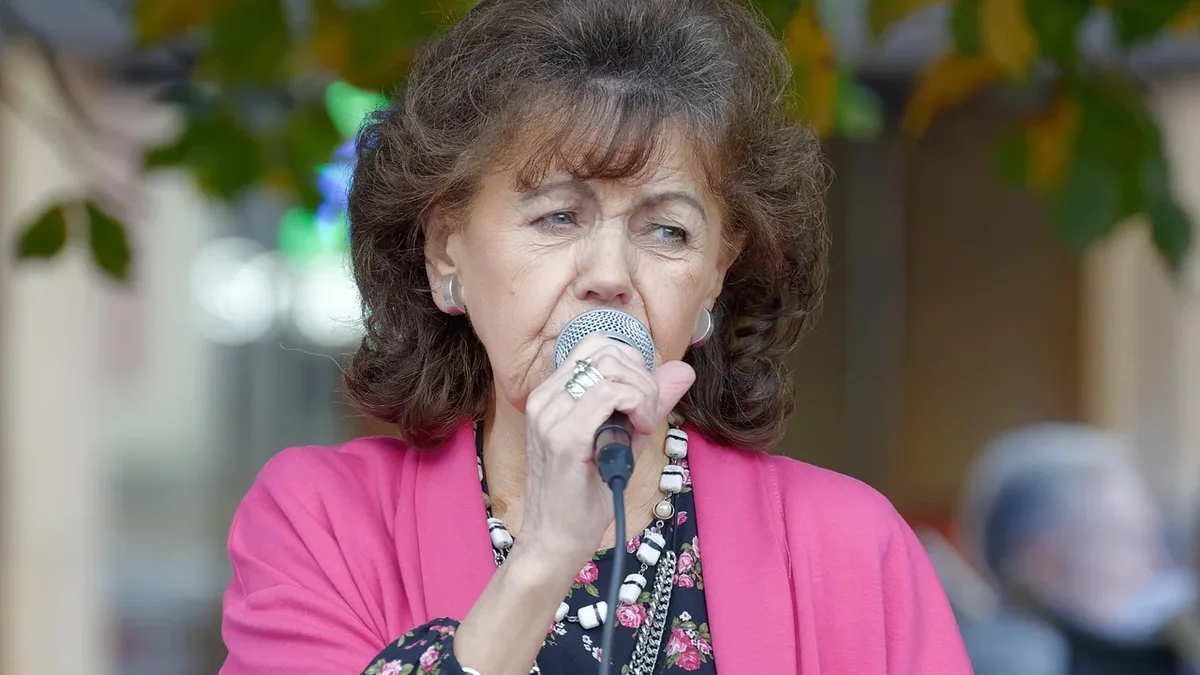
The author, a writer for Defector, was moved to tears upon hearing of Dolly Parton's death. In the subsequent online mourning, he found himself unexpectedly thinking of his very-much-alive mother, Josephine Coviello, an Italian-American woman in her mid-80s from the East Coast.
While scrolling through performances, a profound emotional reaction overtook him. This led to a contemplation of why the loss of a global icon felt connected to the enduring presence of his own mother.
The Sparkle of an Ordinary Life
Josephine Coviello, born in 1941, is the eldest of the Scognamiglio sisters. The writer's father once explained that his mother's continued work into her seventies, like her regular church attendance, was about having "a place to go, and a reason to get dressed up." For her, it is a pleasure to sparkle.
Her meticulous presentation involves exquisite makeup, perfectly styled auburn-blonde hair, sharp and colorful ensembles, and mandatory earrings. This sparkle is achieved not through great wealth or surgical intervention, but through deliberate choice. Like Dolly, she offers a smile and a bright word for everyone, making her, as she merrily notes, "noticeable."
Building Worlds Without a Blueprint
The writer contrasts the two women's origins. Dolly Parton was born into poverty in Tennessee in 1946, one of 12 children. Josephine's story is one of first-generation assimilation and modest mobility. The core parallel lies not in fame or fortune, but in a foundational impulse.
Josephine was determined to build "the possibility for happiness" for her family. Growing up with parents separated from their homeland and language, and facing poverty, she and her sisters worked to create lives with brighter horizons. The writer sees this act of world-building without an inherited template as profoundly admirable.
This directly informed his own academic path into queer theory. The scene of people improvising entire worlds of love, making them vivid and sustaining without official sanction, felt wholly natural. It mirrored his mother's central conviction: that no one should be deprived of love, and that there must always be enough for everyone.
The Agreement on Goodness
The article references critic Lester Bangs's famous obituary for Elvis Presley, which argued we would never again agree on anything as we agreed on Elvis. The writer suggests a different agreement is forming around Dolly Parton, centered on her "embracing non-divisiveness" that was never without principle or devotion.
He quotes Craig Jenkins in New York magazine stating, "What has long been clear is that Parton represented the lasting good that's possible in America." The writer personally disinclines to credit the state with much, but acknowledges Dolly's unique cultural position.
For the writer, Dolly's legacy is not captured in any single song. It is that she made profound goodness seem like the most natural thing in the world. Her decency shone "like a cloak of light." This radiant, accessible goodness is what he mourns, and it is what connects, in his mind, the global star to his sparkly, world-building mother.
Source: Defector